
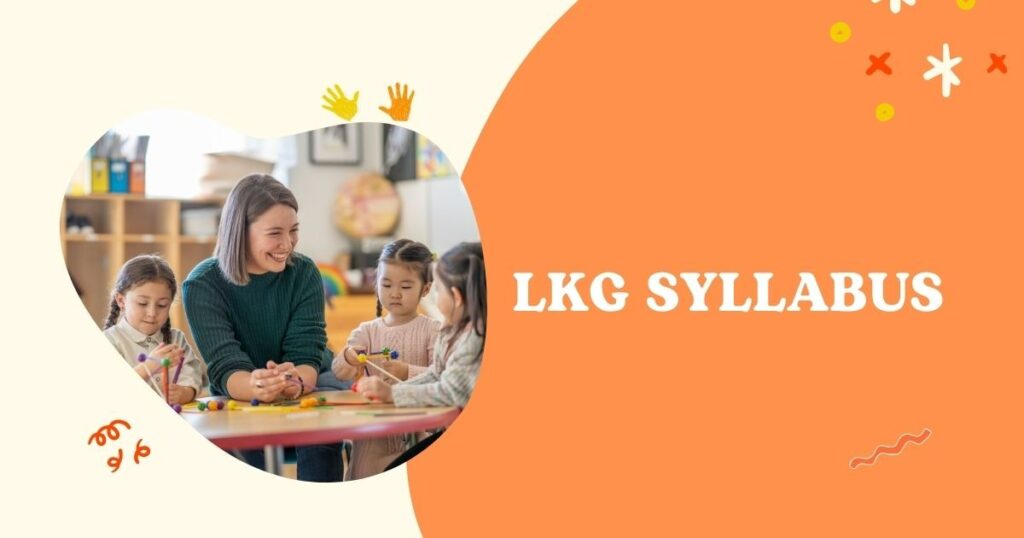
As a parent or teacher, your child’s learning journey in school begins with LKG. The LKG syllabus will show you how it connects between playtime at home and the classroom. Learn what’s inside the LKG syllabus 2025-26. It details how it supports your child’s growth, and as the ones responsible for their educational growth, it shows you exactly how you can help them learn.
Table of Contents
What Is the LKG Syllabus?
LKG syllabus is a simple learning map for your child of 3.5 to 4.5 years. It builds up with free play to basic academic skills. And it focuses on being stress-free, as it is important not to overwhelm them with much mental load.
Also Read: CBSE Nursery Syllabus
LKG or Lower Kindergarten has a focus on working on the child’s early language skills. But also helps in bringing awareness with numbers, and building confidence socially. This is the time when your child is learning to speak and listen clearly. While their imagination is also made to be worked on.
LKG Syllabus and NEP 2020
The LKG syllabus 2025-26 has the goal to make young children learn with playing storytelling and activities. Earlier it was based on memorising. It now follows NEP guidelines from 2020.
The CBSE LKG syllabus reflects this new thinking. It taps into your child’s curiosity. It develops good skills in communicating while building creativity. The NEP 2020 places early childhood education under the Foundational Stage of schooling, covering ages 3 to 8.
Your child’s LKG syllabus CBSE is perfectly designed for growing their imagination, confidence, and problem-solving skills. From a very early stage in learning.
Also Read: ADCA course Syllabus
Under the NEP 2020, the entire approach to learning in LKG has changed to a great extent. And we show you how below.
- Different types of play: Games, songs, and stories teach core ideas without pressure.
- Connect learners with themes: Subjects come with themes as appearing in the real life. They could be seasons and family related.
- Deep focus on mother tongue: As obvious, home language should be first while teaching and then gradually moving to English. This transition has to be smooth and works in favor of bringing fluency early on.
The New LKG Syllabus Introduces Digital Learning
The modern classroom comes with a technology-first approach that really is able to make learning engaging.
Digital tools and smart boards are part of the LKG syllabus CBSE in many schools.
These help your child connect better with lessons and enjoy a mix of visuals and sounds.
Here’s how digital learning adds value:
- Story apps and simple games improve vocabulary and problem-solving.
- Smart boards are for making kids easily make shapes and write letters and numbers.
- There are educational videos make art and music lessons more enjoyable.
In short, you can say that providing both the best of traditional and digital learning is going to keep your child curious and involved.
Thematic and Monthly Planning in LKG
Most schools now use monthly or theme-based plans for the LKG syllabus.
Each month in the syllabus calendar provides a focus on a theme. It could be Seasons or Animals, for example.
This keeps the learning quite organised and easy for children to follow.
It also helps connect subjects in meaningful ways.
For example, when studying “Animals,” your child might read animal stories in English, count animals in math, and draw them in art.
This approach strengthens memory and makes learning practical.
Also Read: SBTE Syllabus
Curriculum in CBSE LKG Syllabus in 2025-26
The CBSE LKG syllabus has these subjects that help children in LKG develop a better future with intuitive learning and play.
| Subject Area | Key Learning Focus |
| Language Skills covering both English and Regional | Teaching children to recognise letters easily, developing simple words, phonics, and rhymes. |
| Mathematics for the early ages | Building counting skills with numbers, shapes and patterns that use imagination |
| General Knowledge (EVS) | Focus on growing basic life skills, how they should even develop personal hygiene, and become more aware of surroundings. |
| Creative Arts | Being creative with basic teaching in drawing with colouring, singing, and storytelling. |
| Physical Development | Playing outdoors and helping with coordination exercises. |
Assessment in LKG
Assessment in LKG is simple and friendly.
Without any formal exams, teachers must observe children during play and activities.
They must look into how children speak, share, and whether they are able to complete small tasks given to them in a small amount of time.
Also Read: AIIMS Nursing Syllabus
Teachers are guided or trained to track the progress by how much effort and improvement the child has in LKG. Grades are not there, which actually keeps learning less pressurised and more focused on encouragement.
How Should You Support Your Child’s Learning with the LKG Curriculum?
As a parent or teacher, only you can make the learning journey of the child in lower kindergarten meaningful.
Some of the small ways you can help every day would be:
- Read daily with them: Create a storytime that builds both curiosity and vocabulary in a gradual manner
- Use daily activities that mask for learning: Help them how to count fruits, spot colours, and name shapes.
- Make them social by talking more: You should always ask open-ended questions like “What did you do at school today?”
- Create regular routines: It is important you build regular times for study, play, and rest. Make it highly comfortable.
- Celebrate all types of progress even if it’s little: Keep giving them small praises every now and then, as that will keep motivation alive.
Browse our Syllabus section for all the latest updates about course & Exam Syllabus